You’re flying to the mainland for three weeks. Grandkids, a wedding, maybe just a break from the heat. The house is locked, the mail is on hold, and a neighbor is watering the plants.
Nobody told the pool.
Mainland pool owners can close their pools for the winter and walk away. You can’t. Our water sits between the high 70s and mid 80s all year, which is exactly the temperature algae loves. The sun burns off chlorine every afternoon. And the trade winds keep dropping leaves into the skimmer whether you’re home or not.
I’m Paul Costello. My father Jim started Koko Head Pool Service in 1995, and I’ve been caring for pools across East Honolulu since 2000. One of the most avoidable calls I get is from someone who just landed at HNL, walked out to the backyard, and found a swamp. It almost never had to happen. This is the checklist I give clients before they travel.
What Happens to an Unattended Pool in Hawaii
A pool doesn’t go from clear to green overnight. It slides there, one step at a time, and each step makes the next one faster. This is the timeline I see most often in an unattended East Honolulu pool with no chlorine feeder and no one checking on it.
A salt system or chlorine feeder slows this down. It doesn’t stop it. A salt cell keeps making chlorine, but if the water level drops, the baskets clog, or the pH drifts up, the chlorine it makes stops working. If your water already looks a little off, my guide to cloudy pool water is worth reading before you leave.
The Evaporation Problem Nobody Plans For
Algae gets all the attention. The water level is what actually wrecks equipment.
East Honolulu pools lose about 1/4 to 1/2 inch of water a day to evaporation, more on windy trade-wind days. That adds up fast when you’re gone.
The gap between a normal water level and the bottom of the skimmer opening is usually only a few inches. Once the water falls below it, the pump starts sucking air. A pump running dry overheats, cooks its seals, and can burn out the motor, all while you’re sitting at a restaurant in Las Vegas. That’s a pump repair bill waiting for you at home.
The auto-fill question: An auto-fill valve solves the evaporation problem, and I recommend one for anyone who travels a lot. But an auto-fill will also feed a leak for weeks without anyone noticing. Before a long trip, run a quick bucket test to make sure your pool isn't leaking. Leaving on vacation with a leak and an auto-fill is how people come home to a huge water bill.
Which Plan Fits Your Trip?
How much prep you need depends on how long you’ll be gone and what equipment you have.
Short Trip
A neighbor-island weekend or a quick mainland visit. Run the pre-trip checklist below, top off the water, and you'll likely come home to a clear pool. If you have a salt system or chlorine feeder, this is usually all you need.
Medium Trip
This is the danger zone. Long enough for algae and evaporation to cause real trouble, short enough that people talk themselves out of planning for it. Do the full checklist and have someone check the pool at least once a week: empty the baskets, check the level, add water.
Long Trip or Second Home
A summer on the mainland, a long stretch away for work, or a home you live in part of the year. You need someone testing and balancing the water every week, not just topping it off. This is where professional service pays for itself.
The 48-Hour Pre-Trip Checklist
Start two days before your flight. That gives you time to shock, filter, and fix anything that looks wrong before you leave.
Bring pH to 7.4 to 7.6 and alkalinity to 80 to 120 ppm. Check your stabilizer (CYA) too. At 30 to 60 ppm, it protects your chlorine from the sun. Below 30, your chlorine may not last past the second day. My pool chemistry guide covers how to test each one.
Brush the walls, steps, and corners, then vacuum the floor. Empty the skimmer basket and the pump basket. You want the pool to start your trip with nothing in it for algae to feed on and nothing blocking the flow.
A clean filter at the start of your trip gives you weeks of capacity for whatever the wind drops in. A half-clogged one might not make it to your second week. See my filter cleaning guide.
Shock at dusk so the sun doesn't burn it off, and let the pump run overnight. Raise your free chlorine to the high end of the 2 to 4 ppm range, since it will fall while you're away. Don't overdo it. Very high chlorine sitting in the pool for days is hard on plaster and equipment.
Fill to the upper part of the skimmer opening, not over it. Every inch you add now buys you two to four days of evaporation. If you have an auto-fill, test it by lowering the level slightly and watching it kick on.
People turn the pump down to save on HECO while they're gone. That's the worst time to do it. Leave it on your normal 8 to 12 hour schedule, and check that the timer or automation system is set right. If your timer has been acting up, get it looked at before you go. My guide to timer and automation repair covers the common failures.
With a salt system, bump the output up modestly and check that the cell is clean. With an inline tablet feeder, fill it. Skip floating tablet dispensers for long trips. They can get stuck against a step or wall and bleach or etch the finish in that one spot.
There's no reason to pay HECO or the propane company to heat a pool nobody is swimming in. Turn the heater or heat pump off (not just down), and turn it back on a day or two before you get home if you want warm water waiting.
Cut back branches over the water, and put away umbrellas, floats, and light furniture. Hurricane season runs June 1 through November 30, and a surprise storm while you're gone can dump a lot of debris in your pool. My storm recovery checklist covers what to do if one hits.
Traveling soon? Let us handle it.
Call before you book your flight. We can keep your pool tested, balanced, and clear while you're gone, so you come home to a pool you can jump into.
Call 808-399-4388What to Leave for Your Neighbor
A helpful neighbor can save your pool on a one-to-three-week trip. But they need clear instructions and limits. Asking a neighbor to add chemicals they don’t understand is how pools get over-chlorinated or acid gets spilled on a deck. Keep their job simple.
This is the single most useful thing a neighbor can do. A clogged skimmer basket starves the pump the same way low water does.
Put a piece of tape on the tile at the right level before you leave. If the water is more than an inch or two below the tape, they add water with the hose until it's back.
A normal hum is fine. Grinding, screeching, gurgling, or silence during its normal run time means something is wrong. Their job is to turn it off and call, not to fix it.
Leave them our number, 808-399-4388, and a text to you giving permission for us to come look. If the water turns green or the pump sounds bad, one call fixes it in days instead of letting it get worse for weeks.
When You Get Home
Walk out to the pool before you unpack. Look for three things: water level, water clarity, and whether the pump sounds normal.
If the level is low, fill it before running the pump. If the water is hazy, test and rebalance, then shock that night. If it’s green, follow my green pool recovery guide or give us a call. A DIY green-pool fix usually runs $50 to $150 in chemicals and several days of work. Professional recovery runs $200 to $500. Both cost more than preventing it.
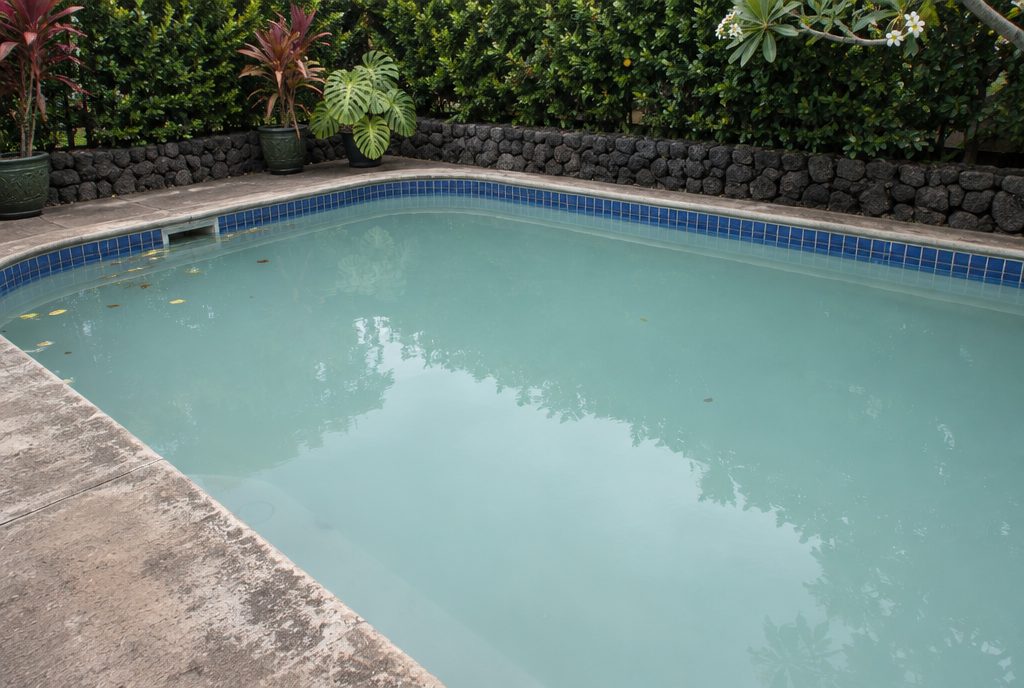
Coming Home to a Green Pool
Coming Home to a Clear Pool
If you travel more than a couple of times a year, or you split your time between Hawaii and somewhere else, weekly service is usually the simpler answer. You stop planning around the pool entirely. Our weekly pool service starts at $250 a month and includes testing, balancing, brushing, skimming, baskets, and an eye on your equipment every visit. If you’re weighing whether it’s worth it, I lay out the numbers in DIY vs. professional pool maintenance and what pool service costs in Hawaii.
For second-home and rental owners: If nobody lives in the house full time, the pool needs someone who shows up every week no matter what. A pool that sits unwatched for a month in our climate isn't a question of if it goes green, only when.
Go enjoy your trip. We'll watch the pool.
Family-owned since 1995, CPO certified, and rated 5.0 on Google. Tell me when you're leaving and how long you'll be gone, and I'll give you a straight quote.
Get a Free QuoteKoko Head Pool Service keeps pools clear year-round throughout East Honolulu:
Hawaii Kai · Portlock · Kahala · Diamond Head · Aina Haina · Hawaii Loa Ridge · Waialae Iki · Kalama Valley · Kuliouou · Hahaione
Call 808-399-4388 or get a free quote.
Frequently Asked Questions
How long can a pool go without maintenance in Hawaii?
A well-prepared pool with a salt system or chlorine feeder can often go about a week without attention. Without any chlorine source, algae can start within a week in our warm water and strong sun. Evaporation is the other limit: at 1/4 to 1/2 inch per day, a pool can drop below the skimmer in about two weeks. For anything longer than a week, have someone check the pool weekly.
Should I turn off my pool pump while I'm on vacation?
No. Keep the pump on its normal 8 to 12 hour daily schedule. Circulation and filtration are what keep chlorine moving and algae from settling in. The one exception is if the water level might fall below the skimmer while you're gone. In that case, the real fix is an auto-fill valve or someone topping off the water, not turning the pump off.
Do I need to winterize my pool in Hawaii?
No. Hawaii pools never freeze, so there's no winterizing. That's also why they can't be "closed" the way mainland pools are. Warm water and year-round sun mean algae can grow in any month. An unattended Hawaii pool needs a plan whenever you're away, not just in winter. My guide to Hawaii's year-round pool season explains more.
Can I just add extra chlorine before I leave?
Shocking the night before you leave helps, but piling in extra chlorine won't carry the pool through a long trip. Our sun breaks it down within days, especially if stabilizer is low. And very high chlorine sitting in the water for days is hard on plaster and equipment. A balanced pool, a steady chlorine source, and someone checking weekly works far better.
Is it worth getting pool service just while I travel?
For trips longer than two or three weeks, usually yes. A green-pool recovery runs $50 to $500 plus days of work, and a pump that runs dry can cost far more. Call us before your trip and we'll talk through coverage for the time you're gone.
What should I do if a storm hits while I'm away?
Ask your neighbor or pool service to check the pool after the storm passes. The first priorities are empty skimmer and pump baskets, a safe water level, and the pump running normally. Debris and runoff will use up chlorine fast, so the water needs to be tested and shocked. Don't have anyone touch electrical equipment that got wet. My storm recovery checklist covers the full process.